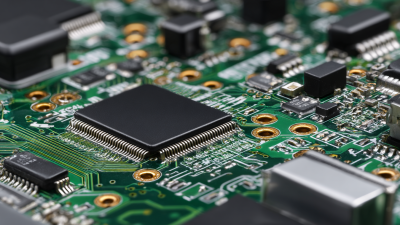
You know, in recent years, 'Chip On Board' (or COB) tech has really started to pick up steam in the electronics world. I was chatting with Dr. Alice Zhang from Advanced Tech Innovations, and she mentioned that 'COB technology offers unparalleled efficiency and miniaturization.' Honestly, that sums it all up pretty well – it’s all about squeezing more performance into a smaller space.
So, basically, COB involves mounting chips directly onto a substrate, which makes the whole design way more compact. It also simplifies things compared to traditional packaging, which tends to be pretty complex and costly. Plus, because it has lower thermal resistance, COB tends to be more reliable, especially in high-performance gadgets.
But let’s be real – switching over to COB isn’t all smooth sailing. Many manufacturers hit snags when it comes to quality control or the upfront costs for setting everything up. Knowing these hurdles is key if you really want to get the most out of COB. It’s not just a drop-in replacement; it takes some thoughtful planning. Still, if you do it right, it’s a game-changer for innovation and making designs more efficient across the board.

What is Chip On Board Technology?
Chip On Board (COB) technology is an advanced method of mounting
semiconductor chips directly onto a printed circuit board (PCB). This process eliminates the need for additional
packaging and reduces the overall footprint of electronic devices. According to a report by ResearchAndMarkets,
the global COB market is projected to grow significantly due to its efficiency and cost-effectiveness.
COB technology allows for higher performance and better
heat dissipation. By directly bonding chips to the board,
manufacturers can achieve better electrical connections. This leads to improved signal integrity and reduced
interference. Some studies indicate that devices using COB technology show a 30% reduction in size
compared to traditional methods. Such efficiency not only benefits manufacturers but also enhances the user experience
through smaller, more powerful devices.
Tip: When considering COB technology, think about your specific application. Determine if the size and
performance gains align with your project goals. Additionally, always validate the reliability of components used
in COB processes. Not all suppliers offer the same quality, so research is essential.
The History and Evolution of Chip On Board Technology
Chip On Board (COB) technology has a fascinating history that reflects advancements in electronics manufacturing. It emerged in the late 20th century as a solution to space constraints in electronic devices. The need for compact designs pushed engineers to innovate. By directly attaching chips onto printed circuit boards, designers reduced the footprint of components significantly.
Over the years, COB technology has evolved impressively. It started with simple applications in low-power devices. Now, it is prevalent in a variety of industries. High-power lights, consumer electronics, and telecommunications benefit from this progress. The method allows for efficient heat dissipation and enhanced performance. However, some challenges remain. There are issues with reliability and humidity sensitivity that require continuous improvements. Manufacturers often grapple with these factors in design and development.
The growth of COB technology represents both success and a learning curve. As companies adopt this technology, there's a need for ongoing assessment. Engineers must weigh the benefits against potential drawbacks. Despite imperfections, the evolution of COB continues to shape the future of electronics. It opens doors to new possibilities while highlighting the necessity for refinement and adaptability.
Chip On Board Technology Adoption Over the Years
This bar chart illustrates the increasing adoption of Chip On Board (COB) technology from 2015 to 2023. The data indicates a steady growth in the percentage of adoption as the technology has evolved and gained more acceptance in various applications, highlighting its benefits and advancements over the years.
How Chip On Board Technology Works
Chip On Board (COB) technology is revolutionizing how electronic components are mounted and connected. With this method, chips are directly attached to a printed circuit board (PCB). This allows for a compact design that significantly reduces the size of electronic devices. The simplicity of the process adds to its appeal.
One significant aspect of COB technology is its efficiency. The direct bonding reduces the distance signals must travel. This can lead to faster signal transmission. It's a valuable advantage in today's high-speed electronic applications. However, with this compact integration comes a challenge.
Heat management can become an issue. Designers must carefully consider thermal properties to prevent overheating.
Additionally, the manufacturing process can increase initial production costs. While this might discourage some manufacturers, the long-term benefits are vital. The reduced footprint and enhanced performance can offset these early expenses. Further, as technology advances, more efficient methods will likely emerge. This ongoing evolution is worth monitoring for those interested in future applications.
Key Advantages of Using Chip On Board Technology
Chip On Board (COB) technology is gaining traction in the electronics industry. It integrates microchips directly onto printed circuit boards, enhancing performance and reducing space. Reports indicate that the global COB market is set to reach $20 billion by 2025, reflecting a growing preference for this technology.
One of the key advantages of COB technology lies in its superior thermal management. By placing chips directly on the board, heat dissipation is significantly improved. This helps prevent overheating, extending the lifespan of electronic devices. Additionally, COB packaging reduces the number of interconnections, thereby minimizing potential points of failure. A study by the International Electronics Manufacturing Initiative highlighted that COB can decrease manufacturing costs by up to 30%.
Another benefit is reduced size and weight. Many electronic devices today require compact designs. COB helps meet these needs by allowing for thinner and lighter products. Moreover, manufacturers can achieve higher reliability due to fewer solder joints. However, transitioning to COB can present challenges. The initial setup costs for machinery and training can be high, causing hesitation in adoption. Despite these concerns, the long-term efficiencies and benefits often outweigh the initial investment.
Applications of Chip On Board Technology in Various Industries
Chip On Board (COB) technology is revolutionizing various industries by enhancing efficiency and performance. This technique involves mounting chips directly onto printed circuit boards (PCBs), which allows for better thermal management and reduced space. For instance, a report by Grand View Research highlights that the global COB market is projected to reach $19.5 billion by 2025, driven by its increasing adoption in sectors like automotive and consumer electronics.
In the automotive industry, COB technology is instrumental in the development of advanced driver-assistance systems (ADAS). These systems rely on compact, efficient sensors that fit seamlessly into vehicles, improving safety and functionality. A study conducted by Allied Market Research estimates that the automotive ADAS market will exceed $60 billion by 2025, with COB being a key enabler. In consumer electronics, devices using COB technology benefit from smaller footprints, higher reliability, and superior performance, which aligns with growing consumer demand for compact designs. However, challenges remain in ensuring the durability of chips under varying environmental conditions.
The versatility of COB technology extends to the medical field as well. Medical devices increasingly require miniaturized components that maintain high performance. According to a report from MarketsandMarkets, the medical electronics market is set to quadruple by 2025, with COB playing a significant role in this transition. Its ability to streamline manufacturing processes while offering high integration suggests that COB will impact various sectors profoundly, but companies must address its limitations, including cost implications and the risk of thermal issues over time.
Comparing Chip On Board Technology with Other Packaging Methods
Chip On Board (COB) technology is a packaging method that directly mounts chips onto a substrate. This contrasts sharply with other methods, such as wire bonding or flip chip packaging. In flip chip technology, solder bumps connect the chip to the substrate, requiring more steps and materials. Conversely, COB reduces these complexities by eliminating wire connections, making the manufacturing process simpler and often more efficient.
One notable benefit of COB technology is its compact design. This allows for a smaller footprint on circuit boards. Smaller size can lead to higher density in electronic devices, suitable for a range of applications from consumer electronics to automotive systems. However, there are challenges. For instance, the reliability of COB can be influenced by environmental factors, such as temperature fluctuations. It requires careful consideration during the design phase.
When compared to traditional packaging methods, COB provides improved thermal performance. Since the chip is in direct contact with the substrate, heat dissipation is enhanced. However, not all applications can fully utilize these benefits. The integration of COB technology requires a solid understanding of both its advantages and its potential limitations. Balancing these factors is crucial for achieving optimal performance in electronic products.
Future Trends and Innovations in Chip On Board Technology
Chip On Board (COB) technology is evolving rapidly, reshaping the landscape of electronic manufacturing. The shift towards
miniaturization and improved performance is driving this trend. According to a report by
MarketsandMarkets, the COB technology market is expected to reach $928 million by 2025, highlighting a robust
growth forecast. This growth can be attributed to increasing demand for compact, lightweight devices in sectors such as consumer
electronics and automotive.
Innovations in COB technology are enhancing
thermal management and electrical performance. Advanced packaging techniques allow for closer chip placement,
reducing signal loss. This can lead to improved efficiency and reduced power consumption. Industry experts note that COB can achieve up to
30% higher efficiency compared to traditional packaging methods. This is crucial as electronic devices become more powerful yet smaller.
However, challenges remain, such as ensuring reliability under varying environmental conditions. Continuous research is needed to address these issues.
Moreover, AI and IoT integration present exciting prospects for COB technology. As smart devices proliferate, the demand for cost-effective manufacturing processes
increases. Future advancements may include self-diagnosing features within COB assemblies, allowing for timely maintenance. Such innovations promise to keep pace with
the rapid transformations in the tech industry, although ensuring quality will always be a critical concern.
Transforming Electronics Manufacturing: Insights from 2023 Reports on Artificial Intelligence PCB Assembly Services
Artificial Intelligence (AI) is not just a fleeting trend but a formidable force that is transforming various sectors, particularly in electronics manufacturing. The 2023 reports indicate significant advancements in specialized PCB assembly services driven by AI. These insights reveal how AI technologies contribute to enhanced efficiency, accuracy, and reduced costs throughout manufacturing processes. By automating design, testing, and assembly phases, manufacturers can produce more reliable and complex circuit boards that meet the growing demands of today’s smart devices.
In the realm of smart home devices, AI-enabled PCB assembly is paving the way for innovations that enhance user experiences. Reports forecast that the smart home market will explode in the coming years, with an expected growth rate of over 25% annually. This surge translates directly to increased demand for PCB assembly services tailored specifically for smart technologies. Similarly, as chatbots and voice assistant devices become integral to daily life, the need for optimized PCB assembly services has never been more critical. Current industry trends reflect that AI-driven assembly techniques are leading to products that are not only smarter but also more efficient in their operations.
The ability of AI to analyze data and improve production processes creates a robust framework for developing next-generation electronics. Future reports anticipate that AI will redefine the landscape of manufacturing, leading to advanced efficiencies and capabilities that were once unimaginable. As the industry evolves, the role of AI in PCB assembly will undoubtedly play a crucial part in driving innovation and meeting the demands of an increasingly technology-reliant society.
FAQS
: COB technology mounts semiconductor chips directly onto a printed circuit board, reducing size and increasing efficiency.
Direct bonding improves electrical connections, resulting in better signal integrity and reduced interference.
Devices using COB can be 30% smaller compared to traditional methods, offering compact designs.
Heat management is crucial, as compact designs may lead to overheating issues during operation.
Initial production costs can be higher; however, long-term benefits may outweigh these early expenses.
The demand for miniaturization is leading to innovations that enhance thermal management and efficiency.
They may introduce self-diagnosing features, improving maintenance and cost-effectiveness in manufacturing processes.
No, not all suppliers provide the same quality, emphasizing the need for thorough research before selection.
Yes, it can achieve up to 30% higher efficiency, reducing overall power usage in devices.
Consider specific application needs, size, performance gains, and always validate component reliability.
Conclusion
Chip On Board (COB) technology is an advanced method of integrating semiconductor chips directly onto a substrate, enhancing performance and efficiency in electronic devices. This technology has evolved significantly over the years, adapting to the increasing demands for miniaturization and higher performance. By facilitating closer connections between the chip and its supporting components, COB improves electrical performance while reducing space requirements.
The key advantages of COB technology include improved thermal performance, reduced assembly costs, and the ability to create compact and lightweight designs. Its applications span across various industries, from consumer electronics to automotive and medical devices, showcasing its versatility. As the industry progresses, future trends indicate a continued innovation in COB technology, leading to even more efficient packaging solutions that meet the challenges of next-generation electronics.