Picking the best single PCB assembly manufacturer in China isn't just about comparing prices or looking at factory photos. Honestly, quality comes down to things like how well they control components, how stable their soldering is, how thorough their inspections are, and whether they actually deliver on time. Sure, a clean production floor is nice—but it doesn't really guarantee they'll be reliable in the long run.
Look, the IPC’s 2024 Electronics Industry Impact Report makes a pretty strong case that electronics are a cornerstone of global manufacturing. And their PCB Technology Roadmap for the same year? It’s all about the push for smaller designs, denser interconnects, and better traceability. These trends touch just about every serious assembly project out there—from a little sensor board all the way to an industrial controller packed with thousands of solder joints. You can’t really afford to ignore them.
You know, Dr. Hayao Nakahara—an industry analyst—once called the PCB sector "a bellwether for the electronics industry." And honestly, that still holds up. PCB demand tends to track what's happening in automotive electronics, telecom, medical devices, industrial automation—you name it. But let's not pretend any ranking is perfect. A company can boast about huge capacity, then fall short on engineering support or be all over the place with component sourcing.
Look, there's no shortage of reports—Mordor Intelligence, Grand View Research—all pointing to continued growth in the global PCB and electronics manufacturing markets. But here's the thing: a growing market alone won't tell you which Chinese partner to trust. You really need to dig into the details. Check their IPC-A-610 workmanship practices, ask to see automated optical inspection records, traceability systems, sample yields, and corrective-action reports. In short, ask for evidence, not promises.
Look, the strongest single PCB assembly manufacturer in China isn't always the one with the lowest price. It’s the partner who actually explains defects clearly, protects your BOM like it’s their own, and gives you a heads-up about delays before they turn into expensive problems. A lot of supplier evaluations still miss that human side. Honestly, that deserves a second look.
What Is Single PCB Assembly?
Single PCB assembly means fitting electronic components onto one printed circuit board to create a functioning circuit. The word “single” can be confusing. It usually describes one board or a standalone assembly, not a board with copper on only one side. A single PCB may have multiple copper layers and still be a single assembled board.
The process starts with a bare board and its design files. Components are placed on solder pads, then attached using methods such as reflow soldering for surface-mount parts or hand soldering for selected through-hole parts. A small board might hold a sensor, connector, and a few resistors. Larger assemblies can contain hundreds of parts. Precise placement matters; even a slightly shifted connector can make installation difficult.
After soldering, the assembly is checked for defects. Visual inspection can reveal bridges, missing parts, or uneven joints, while electrical tests help confirm that key connections work. The exact checks depend on the circuit and its intended use. One point worth remembering: a working prototype does not guarantee every production unit will behave identically. Clear design files, suitable component choices, and repeatable process controls all help, though no process is perfect.
Single PCB assembly begins with engineering review. The team checks the Gerber files, bill of materials, component footprints, and assembly drawings. Design-for-manufacturing feedback can identify narrow solder gaps, unclear polarity marks, or difficult test points. These details matter. A small mistake can delay an entire production run.
The process then moves to material preparation. Components are verified against approved specifications and stored under suitable conditions. A stencil applies solder paste to each exposed pad. Pick-and-place equipment positions surface-mount parts with controlled accuracy. The board passes through a reflow oven, where carefully managed heat melts and solidifies the solder. Larger parts may require manual placement or selective soldering.
Inspection follows assembly. Automated optical inspection checks solder joints, missing parts, and incorrect placement. Technicians may use X-ray inspection for hidden connections. Functional testing confirms whether the assembled board performs as designed. Records should include material lots, inspection results, and operator details. Reliable production depends on traceability, not only speed. No assembly line is perfect. Humidity, component variation, or a weak footprint can still create problems. Reviewing failures honestly helps improve future boards, even when the original design seemed complete.
A single PCB assembly combines a laminate, copper conductors, solder, and carefully matched components. FR-4, a glass-fiber and epoxy laminate, is common because it balances rigidity, electrical insulation, and cost. High-speed designs may need low-loss laminates instead. That choice is not always obvious. A material that performs well electrically may complicate fabrication or raise cost.
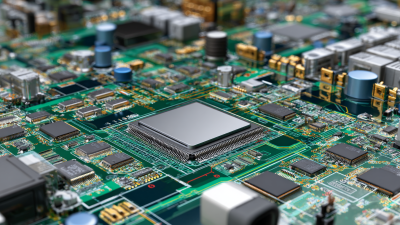
Copper foil forms the conductive paths, while solder—often a tin-based alloy—joins components to pads. The USGS Mineral Commodity Summaries 2024 reports global tin mine production at about 290,000 metric tons in 2023. This figure covers all uses, not PCB solder alone, but it shows why tin supply matters to electronics manufacturing. Assemblies may include resistors, capacitors, diodes, connectors, and integrated circuits, selected for voltage, temperature, footprint, and availability. For example, a small ceramic capacitor can sit beside a processor, while a connector anchors an edge of the board. A capable manufacturer checks component ratings and solder compatibility, then verifies placement and joints through inspection and testing. Specifications can still miss real-world stress. Thermal cycling and vibration deserve attention, especially when the board will operate in a demanding environment.
| Category | Material or Component | Typical Role | Selection Notes |
|---|---|---|---|
| PCB substrate | FR-4 glass-reinforced epoxy laminate | Provides electrical insulation and mechanical support for many general-purpose boards. | Choose laminate properties to suit operating temperature, frequency, and product requirements. |
| Conductive layers | Copper foil | Forms traces, pads, and planes that carry electrical signals and power. | Copper thickness and layer count depend on current, impedance, and layout needs. |
| Protective coating | Solder mask | Covers most copper features and helps reduce solder bridging during assembly. | The selected color is generally a visual or product-design choice; openings expose solderable pads. |
| PCB surface finish | HASL, lead-free HASL, ENIG, or immersion silver | Protects exposed copper pads and supports soldering or component attachment. | The choice depends on pad geometry, assembly process, cost, and applicable product requirements. |
| Assembly material | Solder paste | Deposits solder alloy and flux onto surface-mount pads before component placement. | Alloy and paste selection should match the board finish, assembly process, and customer specification. |
| Passive components | Resistors, capacitors, and inductors | Support functions such as current limiting, filtering, energy storage, and impedance matching. | Values, tolerances, package sizes, and ratings are defined by the circuit design and bill of materials. |
| Active components | Integrated circuits, diodes, and transistors | Perform processing, switching, amplification, regulation, or signal-control functions. | Part selection must follow the approved design, electrical ratings, package, and sourcing requirements. |
| Connections and interfaces | Connectors, sockets, and terminal blocks | Provide electrical or mechanical connections to cables, modules, or other assemblies. | Pinout, current rating, mounting style, and mating requirements should match the product design. |
| Through-hole assembly | Lead-based components and solder joints | Can provide mechanical retention or accommodate component packages designed for plated holes. | May be assembled by wave soldering, selective soldering, or manual soldering, as appropriate. |
| Identification | Silkscreen legend | Marks reference designators, polarity indicators, and other assembly information. | Artwork and readability depend on board layout and manufacturing limits. |
Materials and components vary by design. Final selections should be confirmed against the approved PCB files, bill of materials, and product requirements.
A single PCB assembly should be judged against clear acceptance criteria, not appearance alone. IPC-A-610 is commonly used to assess finished electronic assemblies, including solder joints, component placement, and workmanship. J-STD-001 covers soldering process requirements. The required class depends on the product’s intended use and the agreement between customer and manufacturer; one acceptance level does not suit every board.
Consistency matters. A sound quality plan checks incoming components, verifies soldering temperatures, and records inspection results. For example, operators may examine a fine-pitch connector under magnification for bridges or insufficient solder. Automated optical inspection can catch misplaced parts, but it cannot confirm every hidden joint. X-ray inspection may be appropriate for certain package types. No single test proves everything.
Ask how defects are classified, how rework is documented, and whether process records can be traced to each production lot. ISO 9001 certification can indicate a managed quality system, but it does not guarantee that every assembly is defect-free. That distinction is easy to overlook. Standards help define expectations; careful process control and honest reporting make them useful. Even a detailed inspection plan can miss an issue, so feedback from testing and field performance should inform future builds.
RoHS restricted-substance limits are one measurable compliance requirement used alongside IPC-A-610, IPC J-STD-001, and ISO 9001 quality controls.
The chart shows maximum concentration limits by weight in homogeneous materials under the EU RoHS Directive 2011/65/EU, as amended by Directive (EU) 2015/863. Cadmium is limited to 0.01%; the other listed substances are limited to 0.1%. Actual PCB assembly acceptance also depends on the specified IPC product class, soldering requirements, inspection procedures, traceability, and customer documentation.
Source: European Commission, RoHS Directive 2011/65/EU and amendment (EU) 2015/863. Values apply to homogeneous materials and may be subject to applicable exemptions.
Evaluating a single PCB assembly manufacturer in China starts with evidence from its production floor, not its sales deck. Ask for a recent, anonymized first-pass yield report, defect Pareto chart, and rework records for a product similar to yours. Check whether the figures cover the same board complexity and production volume. A high yield number without context proves little. Ask to trace one board through solder-paste inspection, placement, reflow, and final inspection. Specifics matter.
Verify process controls against relevant IPC workmanship criteria, and request calibration records for inspection equipment. The World Bank’s 2023 Logistics Performance Index ranked China 19th among 139 economies; that offers useful country-level context, not proof of one factory’s delivery performance. Ask the manufacturer for on-time delivery data by month, plus examples of how it handled material shortages or a failed lot.
Then compare quotations line by line: tooling, testing, component sourcing, and packaging can change the real cost. A factory audit helps, but a polished visit can still miss daily variation. I would also request a small pilot run before committing to volume. It takes time. That is often the part buyers skip, and sometimes regret.
The cost and production time of a single PCB assembly depend on its design, materials, and testing needs. A compact board with fine-pitch components may require careful placement and extra inspection. A simple prototype can move faster, but unusual parts or tight tolerances often add setup time. Even one missing component can pause the build.
The bill of materials matters. Readily available components are usually easier to source than parts with long lead times. Board layer count, surface finish, soldering method, and assembly volume also affect price. A clear, complete design file helps reduce questions and rework. Still, estimates can change when a design has not been fully checked.
Tips: Share accurate Gerber files, a verified bill of materials, and assembly drawings. Ask whether the quoted schedule includes component sourcing and inspection. Keep a little time for revisions. It is easy to underestimate that part. Compare suppliers by process control, communication, and test coverage—not price alone.
As electronics manufacturers navigate shifting demand, supply uncertainty, and shorter product cycles, a resilient PCB assembly strategy has become increasingly important. A one-stop service can integrate component sourcing, PCB fabrication coordination, assembly, testing, and project management within a unified workflow. This approach improves communication, strengthens delivery control, and helps manufacturers respond more quickly to changing market requirements.
With 19 years of experience in PCB assembly, an established manufacturing partner can provide practical support across different stages of product development and production. Close cooperation among experienced research and development, quality, procurement, and project management teams helps reduce process delays and maintain consistent standards. Working with more than 15 domestic and international companies also reflects broad experience in managing diverse project expectations, production volumes, and technical requirements.
Strict quality control is essential for reliable electronics manufacturing. A qualified supplier should maintain documented production procedures, traceable inspections, and continuous process improvement. Certifications including ISO 9001:2015, ISO 14001:2015, ISO 45001:2018, ISO 13485:2016, and IATF 16949:2016 demonstrate a structured commitment to quality, environmental responsibility, occupational safety, medical-device production, and automotive manufacturing requirements. By combining integrated services with controlled delivery and disciplined quality management, one-stop PCB assembly can help manufacturers build greater operational resilience.
Many boards use FR-4, a glass-fiber and epoxy laminate. Copper foil forms the conductive paths, and solder joins components to pads. High-speed designs may need low-loss laminates, which can raise fabrication costs.
Typical parts include resistors, capacitors, diodes, connectors, and integrated circuits. A small ceramic capacitor may sit beside a processor, while a connector anchors the board’s edge. Ratings, size, temperature limits, and availability all matter.
IPC-A-610 helps assess finished assemblies, while J-STD-001 covers soldering process requirements. The suitable acceptance class depends on the board’s intended use and the customer-manufacturer agreement.
No. Magnification can reveal bridges or insufficient solder on a fine-pitch connector, but hidden joints may need X-ray inspection. No single test proves everything.
It should check incoming components, monitor soldering temperatures, and record inspection results. Ask how defects are classified and how rework is documented. Even a detailed plan can miss an issue.
No. It can indicate a managed quality system, but it does not guarantee every board is defect-free. Field feedback still matters.
Request recent, anonymized first-pass yield data, defect summaries, and rework records for a comparable product. Check board complexity and production volume; a high yield figure without context proves little.
Ask to trace a board through solder-paste inspection, placement, reflow, and final inspection. Request equipment calibration records and monthly on-time delivery data. A country-level logistics ranking cannot prove one factory’s performance.
It can reveal process problems before a volume commitment. Compare quotations line by line, including tooling, testing, component sourcing, and packaging. It takes time. That step is easy to skip, and sometimes regret.
Single Pcb Assembly refers to the production of a printed circuit board fitted with the electronic components required for a specific application. The process generally includes PCB design review, material preparation, solder paste printing, component placement, reflow or wave soldering, inspection, testing, and final packaging. Common materials include laminate boards, copper layers, solder masks, surface finishes, and components such as resistors, capacitors, integrated circuits, and connectors. Quality control may involve visual inspection, automated optical inspection, electrical testing, and compliance with recognized manufacturing and safety standards.
When evaluating a manufacturer in China, buyers should consider engineering capability, production equipment, quality management, communication, traceability, sample support, and delivery reliability. Cost and production time depend on board size, layer structure, component type, order volume, assembly complexity, testing requirements, and material availability. A suitable manufacturer should provide clear quotations, realistic schedules, consistent quality, and flexible support from prototype development through larger-scale production.